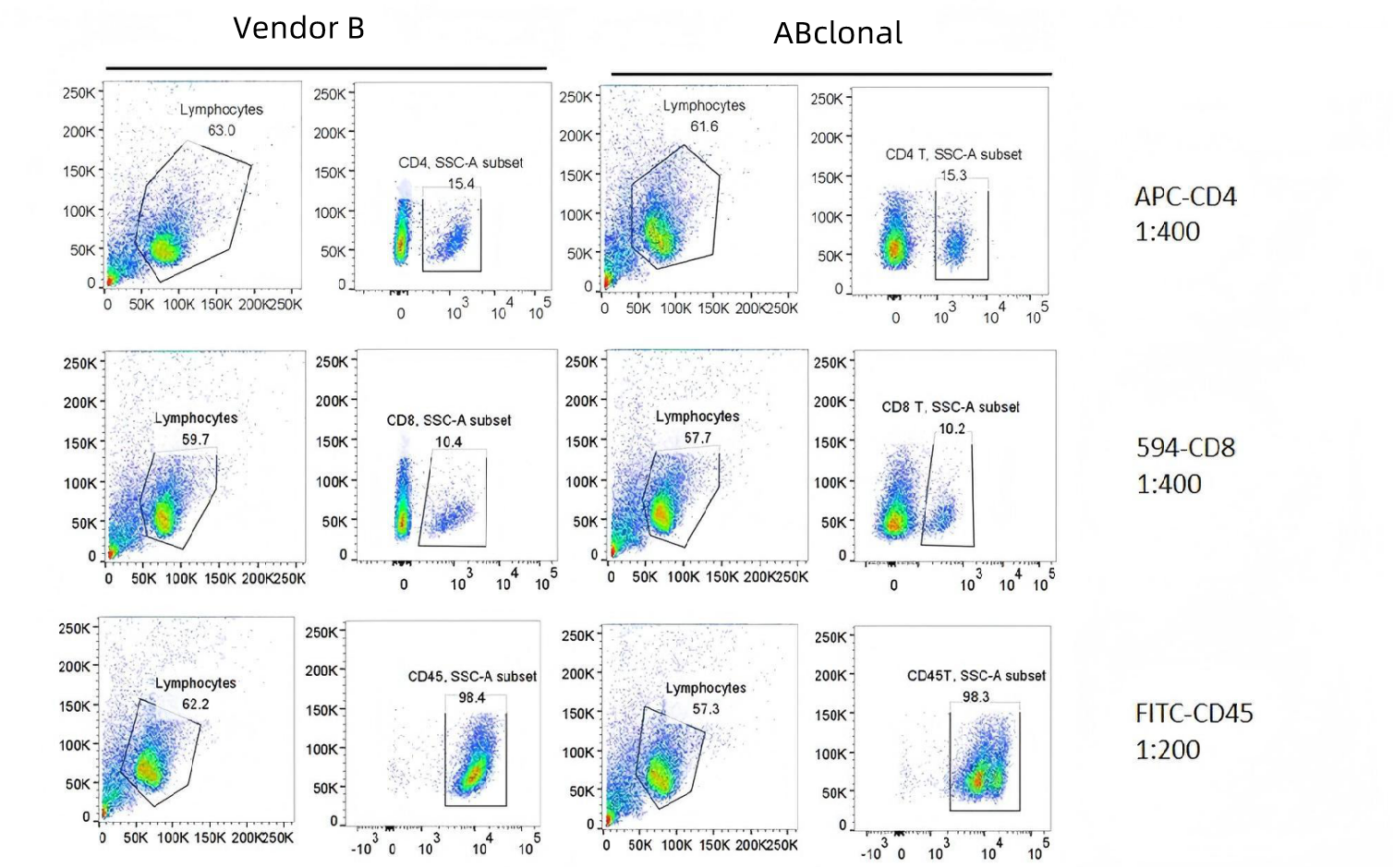
Flow cytometry analysis of mouse PBMCs using ABflo® 647 Rabbit anti-Mouse CD4 mAb (A24721) showed clear separation between positive and negative cell populations, with performance comparable to competing products.
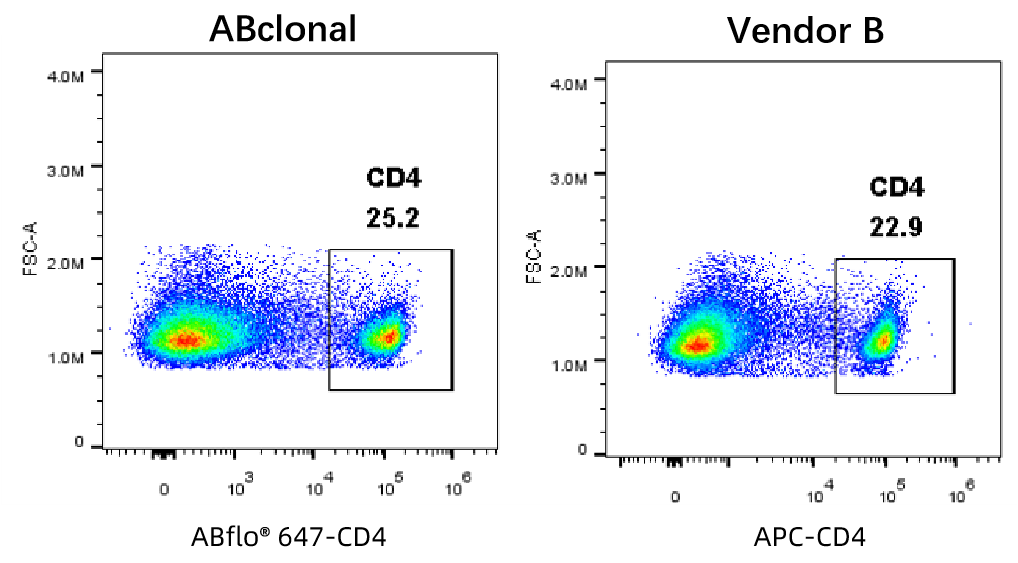
Flow cytometry analysis of mouse spleen using ABflo® 647 Rabbit anti-Mouse CD4 mAb (A24721) clearly classified positive and negative cells. The effects of ABclonal and vendor B are similar.
The figure shows the gating strategy for a blank tube (top) and an ABclonal antibody ABflo®647 Rabbit anti-Mouse CD4 mAb single-staining tube (bottom). The single-staining tube shows a clear separation of CD4+T cells from the negative cell population, with distinct boundaries that allow for a clear delineation of the CD4+T cell population for subsequent analysis.
Flow cytometry analysis of mouse primary T cells, using ABflo® 647 Rabbit anti-Mouse CD4 and ABflo® 488 Rabbit anti-Mouse CD45 monoclonal antibodies, clearly classifies the positive and negative cells.
Predicted to enable several functions, including interleukin-16 binding activity; interleukin-16 receptor activity; and protein homodimerization activity. Involved in helper T cell enhancement of adaptive immune response. Acts upstream of or within several processes, including defense response to Gram-negative bacterium; positive regulation of calcium-mediated signaling; and positive regulation of peptidyl-tyrosine phosphorylation. Located in endoplasmic reticulum; external side of plasma membrane; and membrane raft. Is expressed in several structures, including alimentary system; brain; genitourinary system; hemolymphoid system; and liver and biliary system. Used to study type 1 diabetes mellitus. Human ortholog(s) of this gene implicated in immunodeficiency 79. Orthologous to human CD4 (CD4 molecule).